
Top Reasons Homeowners Are Switching from Wood to Steel Kitchens
For decades, wooden cabinets dominated kitchen interiors in Indian homes. Materials like plywood, MDF, and particle board became common choices for modular kitchens because they allowed flexible designs and finishes.
However, modern homeowners are increasingly reconsidering these materials. Issues such as moisture damage, termite attacks, maintenance costs, and limited lifespan have led many families to explore more durable alternatives.
As a result, stainless steel modular kitchens are gaining popularity among homeowners who want kitchens that combine durability, hygiene, and long-term reliability.
What Is a Steel Kitchen?
A steel kitchen refers to a modular kitchen where the cabinet structure and internal framework are made using stainless steel instead of wood-based materials.
These kitchens are designed to provide:
- Resistance to termites and pests
- High durability
- Moisture and humidity protection
- Hygienic, non-porous surfaces
Because of these advantages, steel kitchens are increasingly being used in modern homes and professional cooking environments.
Why Homeowners Are Moving Away from Wooden Kitchens
Traditional wooden kitchens often face challenges due to environmental conditions and heavy daily use.
Common issues include:
- Moisture absorption leading to cabinet swelling
- Termite infestations damaging internal structures
- Laminate peeling and surface wear
- Frequent repairs and maintenance costs
These issues have encouraged homeowners to consider kitchen materials that offer better long-term performance.
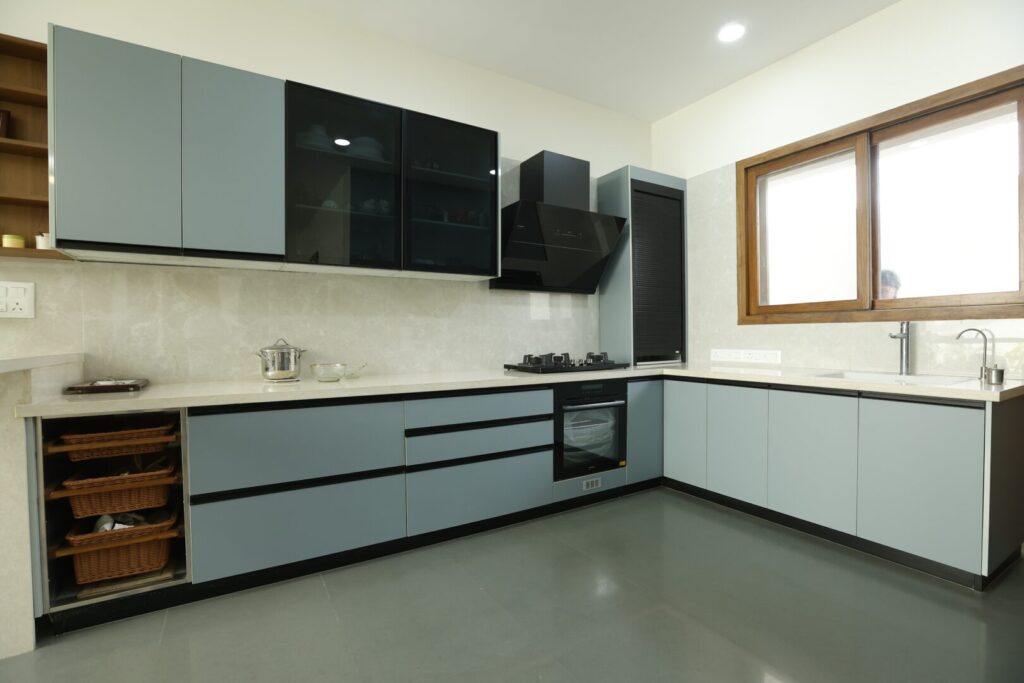
Key Reasons Homeowners Are Choosing Steel Kitchens
1. Complete Termite Protection
Wood-based materials are vulnerable to termite attacks. Since stainless steel contains no organic material, termites cannot damage it.
This eliminates the need for repeated pest control treatments.
2. Resistance to Moisture and Humidity
Kitchens are constantly exposed to steam, water, and humidity. Wooden cabinets may swell or warp when exposed to moisture.
Stainless steel remains stable and does not absorb water, making it suitable for humid environments.
3. Long Lifespan
Steel kitchens are known for their durability. A well-built stainless steel modular kitchen can last 20–30 years or more with minimal maintenance.
In comparison, wooden kitchens often require repairs or replacements within a decade.
4. Hygienic Surfaces
Stainless steel is non-porous, meaning it does not trap bacteria, mold, or food particles.
This makes steel kitchens easier to clean and maintain, which is especially important in cooking spaces.
5. Low Maintenance
Steel kitchens require minimal upkeep. Most surfaces can be cleaned with a simple wipe.
Wood-based kitchens, on the other hand, may require periodic repairs, pest treatments, and laminate replacements.
Stainless Steel Kitchens vs Wooden Kitchens
| Feature | Stainless Steel Kitchen | Wooden Kitchen |
| Termite resistance | Complete | Vulnerable |
| Moisture resistance | Excellent | Can swell or warp |
| Hygiene | Non-porous surface | Can absorb moisture |
| Lifespan | 20–30+ years | 8–12 years |
| Maintenance | Very low | Regular repairs |
Because of these differences, homeowners are increasingly evaluating kitchens based on long-term durability rather than only visual appeal.
Why Modern Kitchens Are Adopting Steel
Kitchen design trends are evolving toward materials that provide strength, hygiene, and reliability.
Stainless steel kitchens support these goals because they:
- Perform well under heavy cooking conditions
- Resist environmental damage
- Maintain their structure over time
This is why many modern modular kitchen systems are being designed using stainless steel structures.
Brands like Tusker Steel Kitchens focus on modular kitchen systems built using stainless steel cabinets designed to withstand humidity, termites, and daily cooking demands.
What This Shift Means for Future Kitchens
The transition from wood to steel kitchens reflects a broader change in how homeowners approach kitchen design.
Instead of focusing only on appearance, homeowners now prioritize:
- Durability
- Hygiene
- Long-term value
- Reduced maintenance
As awareness of these factors increases, stainless steel kitchens are becoming a preferred option for modern homes.
Frequently Asked Questions
Homeowners prefer steel kitchens because they offer durability, termite resistance, moisture protection, and lower maintenance.
Steel kitchens are often considered more durable and hygienic, while wooden kitchens may require more maintenance over time.
A well-built stainless steel kitchen can last 30 + years or more.
Yes. Stainless steel performs well under high heat, oil usage, and heavy cookware.
Yes. Modern stainless steel kitchens are designed with contemporary finishes and modular layouts suitable for modern homes.