
When planning a new kitchen or wardrobe, homeowners often compare wooden interiors vs steel kitchens. While wood offers warmth and tradition, it frequently fails in Indian homes due to moisture, termites, and heat. Steel modular kitchens provide a long-lasting, maintenance-free alternative suitable for modern Indian conditions.
Wooden interiors have long been the preferred choice for homeowners across Bangalore, Hyderabad and Udupi. From modular kitchens to wardrobes, lofts, and storage units, wood offers a warm aesthetic and a sense of tradition that many families appreciate.
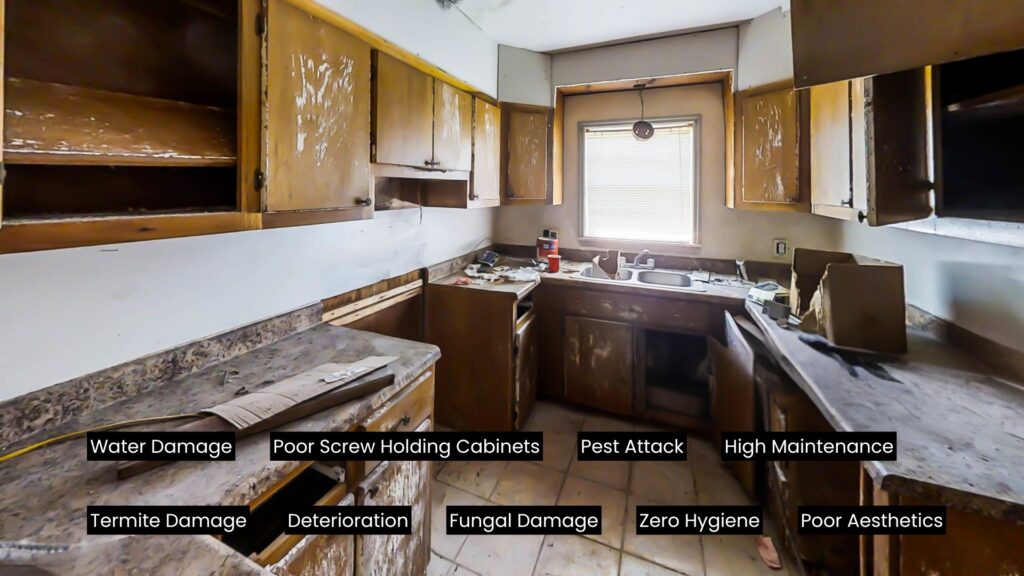
The fundamental question then arises:
Why invest heavily in wooden interiors when they fail to offer long-term reliability?
This guide outlines the real issues associated with wood-based interiors, the hidden costs of maintaining them, and why an increasing number of households are rethinking this investment in 2025.
The Real Problems with Wooden Interiors
1. Termites Affect All Grades of Wood
Homeowners may choose from MDF, particle board, BWR/BWP plywood, or even “termite-resistant” variants, but none of these materials can completely prevent termite infestation.
Termites travel internally through walls, floors, and concealed spaces. Once they reach the wooden structure, they eat it from the inside out. Visible damage often appears only after significant internal deterioration has already occurred.
For kitchens and wardrobes, termite damage is one of the leading reasons for premature replacement.
2. Moisture Damage Is Unavoidable Across Indian Cities
Moisture-related deterioration is not limited to coastal regions. It is prevalent in:
- Bangalore: due to prolonged monsoons and fluctuating humidity
- Hyderabad: due to heat combined with moderate humidity
- Mangalore & Udupi: due to high coastal moisture throughout the year
Wood absorbs moisture over time, leading to swelling, bending, bubbling, cracking, and weakening of the cabinet structure.
The kitchen is the most affected zone because of:
- Sink leaks
- Steam from cooking
- Wet floor cleaning
- Dishwashing moisture
- Daily thermal changes
Even premium waterproof plywood eventually succumbs to moisture ingress.
3. Fungus, Mold, and Odour Formation
Fungus and mold formation are common issues in areas with limited ventilation or high humidity. Wooden wardrobes, drawers, cabinet backs, and corners tend to trap moisture, promoting fungal growth.
This is one of the primary reasons wardrobes in Bangalore, Udupi, and Mangalore often develop a persistent damp smell—particularly during monsoons.
Once fungus penetrates wood, restoration is rarely effective, and replacement becomes the only viable solution.
4. Laminate Peeling Within a Few Years
Laminate finishes on wooden substrates deteriorate when exposed to heat, steam, and oil vapours. This typically results in:
- Peeling edges
- Bubble formation
- Warping around hob areas
- Fading due to prolonged heat exposure
These issues significantly impact the appearance and longevity of the interiors.
5. Hardware Failure Due to Wood Movement
Wood naturally expands and contracts with changes in temperature and humidity. This movement gradually weakens hinges, channels, and other fittings. Homeowners frequently experience:
- Sagging cabinet doors
- Jammed drawers
- Failed soft-close channels
- Misalignment of shutters
These recurring issues require periodic servicing and add to the long-term expense.
6. High Maintenance and Replacement Costs Over Time
In the span of 5–7 years, wooden interiors typically require:
- Repainting or polishing
- Laminate repair or replacement
- Pest control treatments
- Hinge and channel replacements
- Swollen panel replacement
- Cabinet waterproofing
- Structural reinforcement
These ongoing repairs easily add up to a significant amount.
By the 7th to 10th year, many homeowners face the need for a substantial overhaul or complete replacement of their wooden kitchen or wardrobes.
This results in paying twice: once for the original installation and again for repairs or a rebuild.
Why This Matters More in 2025
Modern Indian homes face more intense cooking patterns, increased humidity levels, smaller ventilation spaces, and long monsoon cycles. These conditions accelerate the deterioration of wood-based interiors.
Climate-related moisture patterns across India have also become more unpredictable, making traditional wooden interiors even more prone to early failure.
Looking for Interiors That Don’t Get Damaged? Explore Steel Modular Solutions Instead.
If you’re planning a new kitchen or wardrobe in 2025, it’s worth considering materials that are designed to withstand Indian conditions.
This is where steel modular interiors—especially Tusker’s stainless steel and alloy-coated steel systems—offer a significantly longer lifespan with zero termite issues and no moisture-related failures.
Unlike wood, steel doesn’t swell, warp, crack, or decay. It stays structurally strong for decades, even in coastal humidity or heavy cooking environments.
Tusker’s steel kitchen and wardrobe solutions offer:
- Fully termite-proof construction
- 100% resistance to moisture, fungus, and mold
- Zero swelling or bending
- High load-bearing strength
- Long-lasting hardware alignment
- Premium glass, metal, & stone shutter design options
- A maintenance-free lifespan compared to wood
If you want interiors that stay new for 10–20+ years with no recurring repair costs, steel is a smarter investment.
Calculate Your Steel Modular Kitchen Cost Instantly
Curious how much a high-quality steel kitchen or wardrobe would cost for your home? Use our simple calculator to get an instant price estimate based on your layout, size, and preferred finishes.
Check Your Steel Kitchen Price Now →Why Spend So Much on Wooden Interiors When They Eventually Get Damaged? (2025 Guide for Indian Homes)
Wooden interiors have long been the preferred choice for homeowners across Bangalore, Hyderabad, Mangalore, and Udupi. From modular kitchens to wardrobes, lofts, and storage units, wood offers a warm aesthetic and a familiar, traditional feel.
However, the durability of wood in Indian climatic and usage conditions is far from ideal. Most homeowners discover—often within just a few years—that wooden interiors deteriorate rapidly when exposed to moisture, termites, heat, and everyday kitchen activity.
The Real Problems with Wooden Interiors
1. Termites Affect All Grades of Wood
Whether you choose MDF, particle board, BWR/BWP plywood, or so-called “termite-resistant” variants, no wooden material is 100% termite-proof. Termites move internally through walls, flooring gaps, and hidden ducts. Once they reach wooden cabinets, they start eating from the inside. By the time you see visible signs, major internal damage has usually occurred. Research by the ICAR confirms that termite infestation is one of the top reasons for premature replacement of kitchens and wardrobes.
2. Moisture Damage Is Unavoidable in Indian Homes
Moisture-related deterioration is pervasive across all Indian cities:
- Bangalore: long monsoons + changing humidity
- Hyderabad: heat + moderate humidity
- Mangalore & Udupi: year-round coastal moisture
Wood absorbs moisture gradually, leading to swelling, bending, bubbling, cracking, and structural weakening. Even the best waterproof plywood eventually succumbs to moisture ([BIS Standards](https://www.bis.gov.in)). Kitchens are the worst affected due to sink leaks, steam from cooking, wet mopping, dishwasher moisture, and constant heat changes. According to the India Meteorological Department (IMD), humidity in coastal cities remains high most of the year, accelerating wood damage.
3. Fungus, Mold & Odour Formation
Poor ventilation and humidity create ideal conditions for fungus and mold. Wooden wardrobes, cabinet backs, and drawer corners trap moisture, resulting in persistent damp smells and fungal staining. Once fungus penetrates wood, restoration is rarely effective, making replacement inevitable.
4. Laminate Peeling Happens Within a Few Years
Heat, moisture, and oil vapours directly impact laminate adhesion on wooden substrates. This leads to peeling edges, bubbles on surfaces, warping near hob areas, and fading due to heat. These issues make interiors look old and worn out long before their expected life span.
5. Hardware Failure Due to Wood Movement
Wood expands and contracts with temperature and humidity changes. This constant movement strains the hardware, causing sagging shutters, jammed drawers, weakened soft-close channels, and misalignment. Frequent servicing becomes unavoidable, adding to long-term maintenance costs.
6. High Maintenance & Replacement Costs Over Time
Within 5–7 years, wooden interiors typically require repainting, laminate repair, pest control, hinge/channel replacement, panel replacement, waterproofing, and structural reinforcement. By 7–10 years, many homeowners end up needing a major overhaul or complete replacement. This means homeowners effectively pay twice—once for installation and again for repairs or rebuilding.
Why This Matters Even More in 2025
Modern homes face heavier cooking loads, rising humidity levels, smaller kitchens, fewer ventilation points, and extended monsoon seasons. All these factors accelerate the deterioration of wood. Climate unpredictability across India, as highlighted by IPCC reports, makes traditional wooden interiors even more vulnerable.
Looking for Interiors That Don’t Get Damaged? Explore Steel Modular Solutions Instead.
If you’re planning a new kitchen or wardrobe in 2025, it’s worth considering materials that are designed to withstand Indian conditions. Steel modular interiors—especially Tusker’s stainless steel and alloy-coated steel systems—offer a significantly longer lifespan with zero termite issues and no moisture-related failures.
Unlike wood, steel doesn’t swell, warp, crack, or decay. It stays structurally strong for decades, even in coastal humidity or heavy cooking environments. Tusker’s steel kitchen and wardrobe solutions offer:
- Fully termite-proof construction
- 100% resistance to moisture, fungus, and mold
- Zero swelling or bending
- High load-bearing strength
- Long-lasting hardware alignment
- Premium glass, metal, & stone shutter design options
- Maintenance-free lifespan compared to wood