
Designing a kitchen is not only about cabinets or materials—it starts with choosing the right kitchen layout. The layout determines how efficiently the kitchen functions, how comfortable cooking feels, and how well the space is used.
In Indian homes, kitchens must support heavy cooking, multiple utensils, appliance storage, and efficient workflow. Because of this, modular kitchens today are designed using proven layouts such as L-shaped, U-shaped, parallel, and island kitchens.
Each layout serves a different purpose depending on available space, cooking habits, and household size.
This guide explains the most popular modular kitchen layouts used in Indian homes and how to choose the right one.
Which Modular Kitchen Layout Is Best?
There is no single “best” kitchen layout for every home. The right layout depends on space and usage.
- L-Shaped Kitchen – Ideal for small to medium homes and open kitchens
- U-Shaped Kitchen – Best for larger kitchens with maximum storage needs
- Parallel Kitchen – Highly efficient for compact apartments
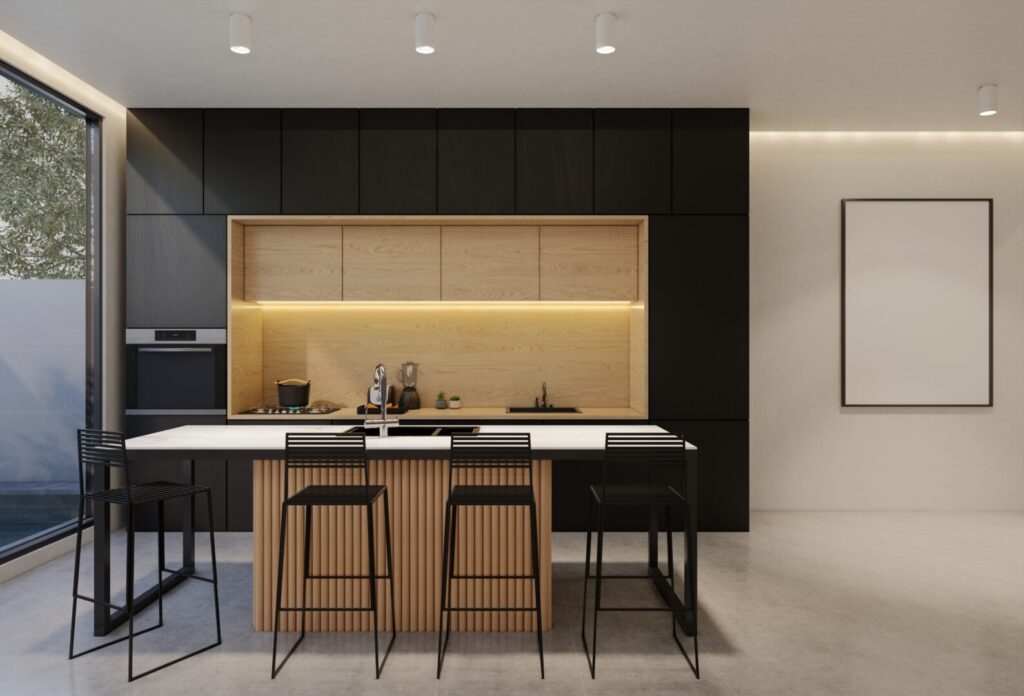
- Island Kitchen – Suitable for spacious homes with open layouts
Each layout is designed to improve workflow, storage, and cooking convenience.
Why Kitchen Layout Matters in Modular Kitchen Design
A well-designed kitchen layout ensures that the three most important kitchen zones—the sink, stove, and refrigerator—are positioned efficiently.
This concept is often called the kitchen work triangle, which helps minimize unnecessary movement while cooking.
A good layout improves:
- Cooking efficiency
- Storage organization
- Appliance placement
- Overall kitchen comfort
Choosing the right layout is therefore the foundation of a functional modular kitchen
1. L-Shaped Modular Kitchen
What Is an L-Shaped Kitchen?
An L-shaped kitchen uses two adjacent walls to create a layout that resembles the letter “L”.
This design leaves the remaining space open, making the kitchen feel larger and less crowded.
Best for:
- Small to medium apartments
- Open kitchen designs
- Homes with limited wall space
Key Advantages
- Efficient use of corner space
- Open layout improves movement
- Suitable for modern apartments
- Allows space for a dining area or island
Because of its flexibility, the L-shaped kitchen is one of the most common modular kitchen layouts in Indian homes.
2. U-Shaped Modular Kitchen
What Is a U-Shaped Kitchen?
A U-shaped kitchen uses three connected walls of cabinets, forming a “U” layout.
This layout surrounds the user with storage and work surfaces, creating a highly efficient cooking environment.
Best for:
- Larger kitchens
- Homes with frequent cooking
- Families needing more storage
Key Advantages
- Maximum storage capacity
- Large countertop workspace
- Easy access to appliances
- Ideal for heavy cooking
U-shaped kitchens are popular in homes where the kitchen is a dedicated cooking space rather than part of the living area.
3. Parallel Modular Kitchen
What Is a Parallel Kitchen?
A parallel kitchen (also called a galley kitchen) has two parallel countertops facing each other.
One side usually contains the cooking area, while the opposite side is used for preparation and storage.
Best for:
- Compact apartments
- Narrow kitchen spaces
- Homes with limited floor area
Key Advantages
- Extremely efficient workflow
- Excellent storage on both sides
- Easy appliance organization
- Ideal for high-function kitchens
Parallel kitchens are widely used in urban Indian apartments because they maximize functionality in small spaces.
3. Parallel Modular Kitchen
What Is a Parallel Kitchen?
A parallel kitchen (also called a galley kitchen) has two parallel countertops facing each other.
One side usually contains the cooking area, while the opposite side is used for preparation and storage.
Best for:
- Compact apartments
- Narrow kitchen spaces
- Homes with limited floor area
Key Advantages
- Extremely efficient workflow
- Excellent storage on both sides
- Easy appliance organization
- Ideal for high-function kitchens
Parallel kitchens are widely used in urban Indian apartments because they maximize functionality in small spaces.
If you are exploring different kitchen design styles, you can also browse our latest modular kitchen designs for inspiration. Tusker regularly updates a collection of modern stainless steel kitchen concepts that combine smart layouts with premium finishes. You can explore one of our design inspirations here: Silverstone Kitchen Design – showcasing how efficient layouts and durable stainless steel structures come together to create functional and elegant kitchens for modern homes.
Modular Kitchen Layout Comparison
| Kitchen Layout | Space Requirement | Best For | Key Advantage |
| L-Shape | Small to medium | Apartments | Efficient and open |
| U-Shape | Large kitchens | Heavy cooking | Maximum storage |
| Parallel | Compact spaces | Urban apartments | Highly efficient workflow |
| Island | Large open kitchens | Luxury homes | Additional workspace |
Each layout can be customized based on storage needs, appliances, and cooking style.
Choosing the Right Layout for Your Kitchen
When selecting a kitchen layout, homeowners should consider:
Available Space
The size and shape of the room determine which layouts are possible.
Cooking Frequency
Homes with frequent cooking benefit from layouts that offer larger work areas.
Storage Requirements
Families with more cookware and groceries need layouts with greater storage capacity.
Appliance Placement
Modern kitchens include appliances such as ovens, microwaves, dishwashers, and chimneys, which must fit naturally into the layout.
Role of Materials in Modular Kitchen Layouts
While layout determines workflow, material choice determines durability.
Traditional modular kitchens often use plywood or MDF structures, which may be affected by moisture or termites over time.
Modern alternatives such as stainless steel modular kitchens offer advantages such as:
- Resistance to moisture
- Termite protection
- Long lifespan
- Hygienic surfaces
Brands like Tusker Steel Kitchens focus on building modular kitchen systems using stainless steel structures designed for Indian cooking environments.
This combination of functional layouts and durable materials helps create kitchens that remain reliable for many years.
Why Modular Kitchen Layout Planning Is Important
The layout of a kitchen affects everyday cooking convenience more than any other design element.
A well-planned modular kitchen layout improves:
- Movement efficiency
- Storage accessibility
- Cooking comfort
- Kitchen organization
By choosing the right layout and durable materials, homeowners can create kitchens that are both practical and visually appealing.
When planning a modular kitchen layout, it is also useful to understand the principles of efficient kitchen design used globally. The concept of the kitchen work triangle, which focuses on the ideal placement of the sink, stove, and refrigerator, helps reduce unnecessary movement while cooking. This design principle has been widely adopted in modern kitchens to improve workflow and functionality.
If you would like to see how different kitchen layouts come to life in real homes, explore the Tusker Kitchens Portfolio. It showcases a range of stainless steel modular kitchens designed for Indian households, featuring practical layouts, smart storage solutions, and premium finishes. Browse the designs here:Tusker Kitchens Portfolio to discover ideas that can inspire your own kitchen planning.
Frequently Asked Questions
Which modular kitchen layout is best for small homes?
L-shaped and parallel kitchens are ideal for compact apartments because they maximize space efficiency.
Which kitchen layout provides the most storage?
U-shaped kitchens usually provide the highest storage capacity.
Are island kitchens suitable for all homes?
Island kitchens require larger spaces and are typically used in open-plan homes.
What is the most efficient kitchen layout?
Parallel kitchens are considered highly efficient because they allow easy movement between cooking and preparation areas.
Which material is best for modular kitchens?
Materials that resist moisture and termites, such as stainless steel, are often preferred for long-term durability.