
Bangalore’s humidity and monsoons can damage wooden kitchens. Discover why stainless steel modular kitchens resist moisture, termites, and offer long-lasting durability.
Many traditional kitchens use wood-based materials such as plywood, MDF, or particle board. However, exposure to moisture, steam, and daily cooking heat can gradually affect these materials.
Because of this, many homeowners are now exploring stainless steel modular kitchens, which are designed to perform reliably even in humid environments like Bangalore.
What Is a Stainless Steel Modular Kitchen?
A stainless steel modular kitchen is a kitchen system where the cabinet structure and internal framework are made using stainless steel instead of wood-based materials.
These kitchens are designed to provide:
- Resistance to moisture and humidity
- Termite protection
- Hygienic, non-porous surfaces
- Long structural lifespan
Because stainless steel does not absorb water or warp with temperature changes, it performs well in humid climates and heavy cooking environments.
Understanding Bangalore’s Weather and Kitchen Conditions
Although Bangalore has relatively pleasant weather, kitchens still experience environmental factors such as:
- Monsoon humidity during rainy seasons
- Steam and heat from daily cooking
- Moisture exposure near sinks and dishwashing areas
- Temperature variations across seasons
These conditions can gradually affect cabinet materials, especially those that absorb moisture.
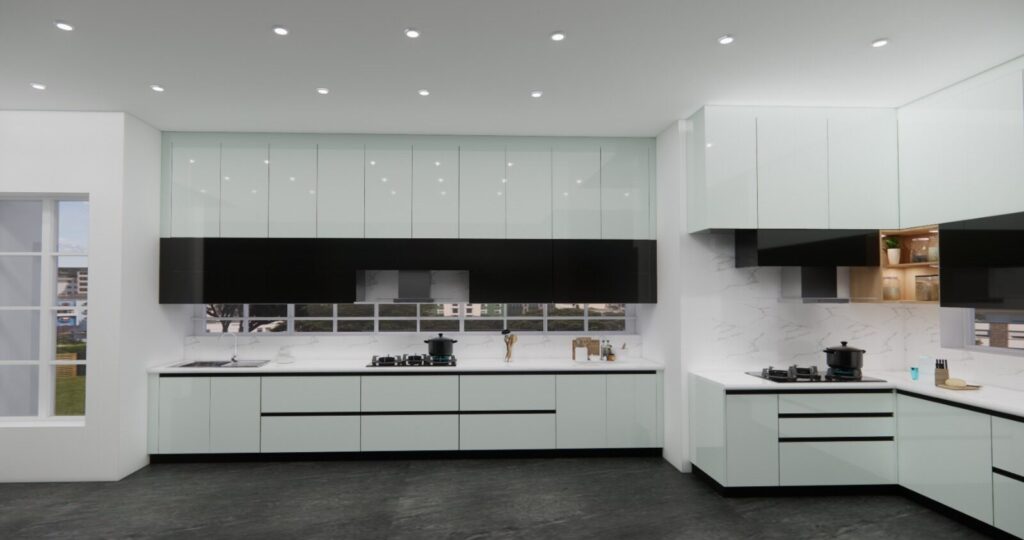
How Stainless Steel Kitchens Perform in Humid Conditions
Moisture Resistance
Stainless steel does not absorb water or humidity. Unlike wooden cabinets, it does not swell, warp, or weaken when exposed to moisture.
This makes stainless steel kitchens suitable for homes where kitchens experience regular steam and water exposure.
Termite Protection
Wood-based materials remain vulnerable to termites, especially in humid environments. Stainless steel cabinets are naturally termite-proof because steel contains no organic material.
This eliminates the need for repeated pest control treatments.
Structural Stability
Humidity can gradually weaken wooden cabinet structures. Stainless steel kitchens maintain their shape and strength even after years of use.
A well-designed stainless steel kitchen can last 20–30 years or more.
Hygienic Cooking Surfaces
Stainless steel surfaces are non-porous and easy to clean. They do not trap bacteria, mold, or food residue.
This helps maintain hygienic kitchen conditions, especially in areas exposed to moisture and cooking oils.
Stainless Steel vs Wooden Kitchens in Bangalore’s Climate
| Feature | Stainless Steel Kitchen | Wooden Kitchen |
| Moisture resistance | Excellent | Can swell or warp |
| Termite protection | Complete | Vulnerable |
| Hygiene | Non-porous surface | Can absorb moisture |
| Lifespan | 30+ years | 8–12 years |
| Maintenance | Very low | Moderate to high |
Because of these differences, stainless steel kitchens are often considered a long-term solution for humid environments.
Why Bangalore Homeowners Are Considering Steel Kitchens
Modern homeowners are increasingly focusing on durability and maintenance when choosing kitchen materials.
Stainless steel kitchens align with these priorities because they offer:
- Resistance to humidity and moisture
- Long lifespan with minimal repairs
- Hygienic surfaces for cooking
- Structural stability over time
Brands such as Tusker Steel Kitchens develop modular kitchen systems using stainless steel cabinet structures designed for Indian cooking environments and climate conditions.
Why Climate-Resilient Kitchens Matter
Kitchen interiors should not only look attractive at installation but also perform well under daily use and environmental conditions.
In cities like Bangalore where humidity and monsoons can affect interiors, selecting materials that resist moisture and pests helps ensure the kitchen remains functional for many years.
Stainless steel kitchens provide a practical solution for homeowners who want durable and low-maintenance kitchen spaces.
Frequently Asked Questions
Because they offer durability, termite resistance, moisture protection, and lower long-term maintenance.
Yes. Stainless steel surfaces are non-porous and easy to clean, preventing bacteria and mold buildup.
A well-designed stainless steel kitchen can last 20–30 years or more.
Wood-based cabinets may swell, warp, or develop mold if exposed to long-term moisture.
Yes. Stainless steel kitchens resist moisture, humidity, and termites, making them suitable for Bangalore homes.